About the book
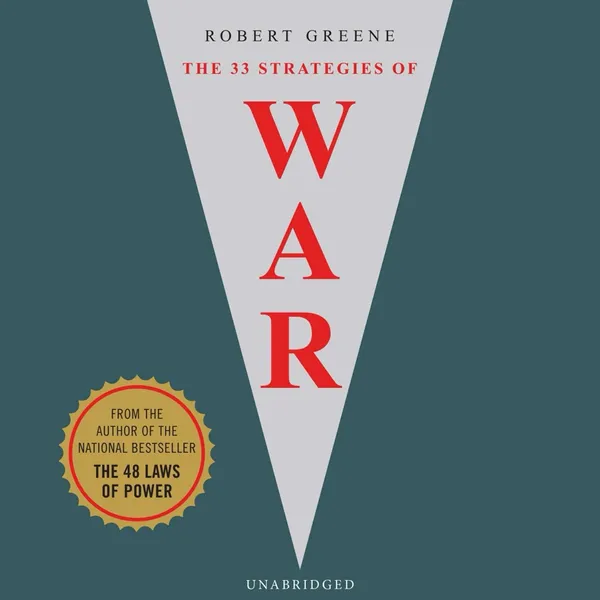
33 Strategies of War is a comprehensive guide to the subtle social game of everyday life, informed by the most ingenious and effective military principles in war. It's the I-Ching of conflict, the contemporary companion to Sun Tzu's The Art of War , and is abundantly illustrated with examples from history, including the folly and genius of everyone from Napoleon to Margaret Thatcher, Hannibal to Ulysses S. Grant, movie moguls to samurai swordsmen.
Highlights that stuck
[Strategy] is more than a science: it is the application of knowledge to practical life, the development of thought capable of modifying the original guiding idea in the light of ever-changing situations; it is the art of acting under the pressure of the most difficult conditions.
The word “strategy” comes from the ancient Greek word strategos, meaning literally “the leader of the army.” Strategy in this sense was the art of generalship, of commanding the entire war effort, deciding what formations to deploy, what terrain to fight on, what maneuvers to use to gain an edge.
Although the word “strategy” itself is Greek in origin, the concept appears in all cultures, in all periods.
Look at things as they are, not as your emotions color them. In strategy you must see your emotional responses to events as a kind of disease that must be remedied. Fear will make you overestimate the enemy and act too defensively. Anger and impatience will draw you into rash actions that will cut off your options. Overconfidence, particularly as a result of success, will make you go too far. Love and affection will blind you to the treacherous maneuvers of those apparently on your side. Even the subtlest gradations of these emotions can color the way you look at events. The only remedy is to be aware that the pull of emotion is inevitable, to notice it when it is happening, and to compensate for it. When you have success, be extra wary. When you are angry, take no action.
Many psychologists and sociologists have argued that it is through conflict that problems are often solved and real differences reconciled. Our successes and failures in life can be traced to how well or how badly we deal with the inevitable conflicts that confront us in society. The common ways that people deal with them—trying to avoid all conflict, getting emotional and lashing out, turning sly and manipulative—are all counterproductive in the long run, because they are not under conscious and rational control and often make the situation worse. Strategic warriors operate much differently. They think ahead toward their long-term goals, decide which fights to avoid and which are inevitable, know how to control and channel their emotions. When forced to fight, they do so with indirection and subtle maneuver, making their manipulations hard to trace. In this way they can maintain the peaceful exterior so cherished in these political times.
5 highlights in my Readwise library; these are the ones I keep coming back to.