About the book
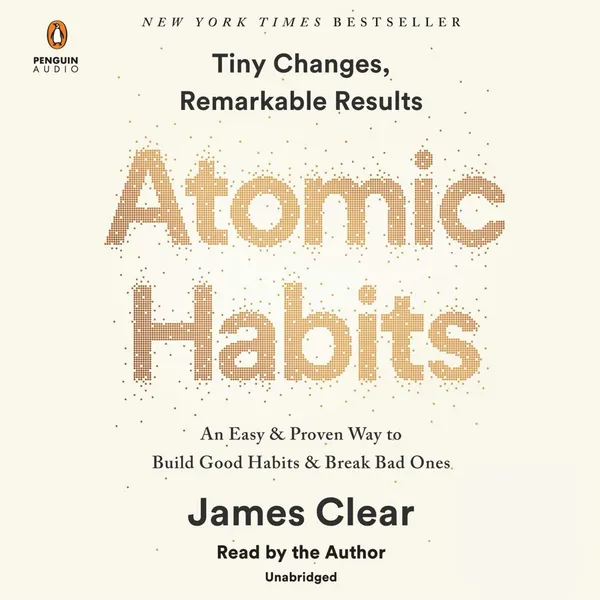
The #1 New York Times bestseller. Over 25 million copies sold! Translated into 60+ languages! Tiny Changes, Remarkable Results No matter your goals, Atomic Habits offers a proven framework for improving--every day. James Clear, one of the world's leading experts on habit formation, reveals practical strategies that will teach you exactly how to form good habits, break bad ones, and master the tiny behaviors that lead to remarkable results. If you're having trouble changing your habits, the problem isn't you. The problem is your system. Bad habits repeat themselves again and again not because you don't want to change, but because you have the wrong system for change. You do not rise to the level of your goals. You fall to the level of your systems. Here, you'll get a proven system that can take you to new heights. Clear is known for his ability to distill complex topics into simple behaviors that can be easily applied to daily life and work. Here, he draws on the most proven ideas from biology, psychology, and neuroscience to create an easy-to-understand guide for making good habits inevitable and bad habits impossible. Along the way, readers will be inspired and entertained with true stories from Olympic gold medalists, award-winning artists, business leaders, life-saving physicians, and star comedians who have used the science of small habits to master their craft and vault to the top of their field. Learn how to: make time for new habits (even when life gets crazy); overcome a lack of motivation and willpower; design your environment to make success easier; get back on track when you fall off course; ...and much more. Atomic Habits will reshape the way you think about progress and success, and give you the tools and strategies you need to transform your habits--whether you are a team looking to win a championship, an organization hoping to redefine an industry, or simply an individual who wishes to quit smoking, lose weight, reduce stress, or achieve any other goal.
Highlights that stuck
We all face challenges in life. This injury was one of mine, and the experience taught me a critical lesson: changes that seem small and unimportant at first will compound into remarkable results if you’re willing to stick with them for years. We all deal with setbacks but in the long run, the quality of our lives often depends on the quality of our habits. With the same habits, you’ll end up with the same results. But with better habits, anything is possible.
Meanwhile, improving by 1 percent isn’t particularly notable—sometimes it isn’t even noticeable—but it can be far more meaningful, especially in the long run. The difference a tiny improvement can make over time is astounding. Here’s how the math works out: if you can get 1 percent better each day for one year, you’ll end up thirty-seven times better by the time you’re done. Conversely, if you get 1 percent worse each day for one year, you’ll decline nearly down to zero. What starts as a small win or a minor setback accumulates into something much more.
Habits are the compound interest of self-improvement. The same way that money multiplies through compound interest, the effects of your habits multiply as you repeat them. They seem to make little difference on any given day and yet the impact they deliver over the months and years can be enormous. It is only when looking back two, five, or perhaps ten years later that the value of good habits and the cost of bad ones becomes strikingly apparent.
Similarly, a slight change in your daily habits can guide your life to a very different destination. Making a choice that is 1 percent better or 1 percent worse seems insignificant in the moment, but over the span of moments that make up a lifetime these choices determine the difference between who you are and who you could be. Success is the product of daily habits—not once-in-a-lifetime transformations.
That said, it doesn’t matter how successful or unsuccessful you are right now. What matters is whether your habits are putting you on the path toward success. You should be far more concerned with your current trajectory than with your current results. If you’re a millionaire but you spend more than you earn each month, then you’re on a bad trajectory. If your spending habits don’t change, it’s not going to end well. Conversely, if you’re broke, but you save a little bit every month, then you’re on the path toward financial freedom—even if you’re moving slower than you’d like.
Your outcomes are a lagging measure of your habits. Your net worth is a lagging measure of your financial habits. Your weight is a lagging measure of your eating habits. Your knowledge is a lagging measure of your learning habits. Your clutter is a lagging measure of your cleaning habits. You get what you repeat.
Breakthrough moments are often the result of many previous actions, which build up the potential required to unleash a major change. This pattern shows up everywhere. Cancer spends 80 percent of its life undetectable, then takes over the body in months. Bamboo can barely be seen for the first five years as it builds extensive root systems underground before exploding ninety feet into the air within six weeks.
This is one of the core reasons why it is so hard to build habits that last. People make a few small changes, fail to see a tangible result, and decide to stop. You think, “I’ve been running every day for a month, so why can’t I see any change in my body?” Once this kind of thinking takes over, it’s easy to let good habits fall by the wayside. But in order to make a meaningful difference, habits need to persist long enough to break through this plateau—what I call the Plateau of Latent Potential.
What’s the difference between systems and goals? It’s a distinction I first learned from Scott Adams, the cartoonist behind the Dilbert comic. Goals are about the results you want to achieve. Systems are about the processes that lead to those results.
What do I mean by this? Are goals completely useless? Of course not. Goals are good for setting a direction, but systems are best for making progress. A handful of problems arise when you spend too much time thinking about your goals and not enough time designing your systems.
50 highlights in my Readwise library; these are the ones I keep coming back to.