On this page
Highlights
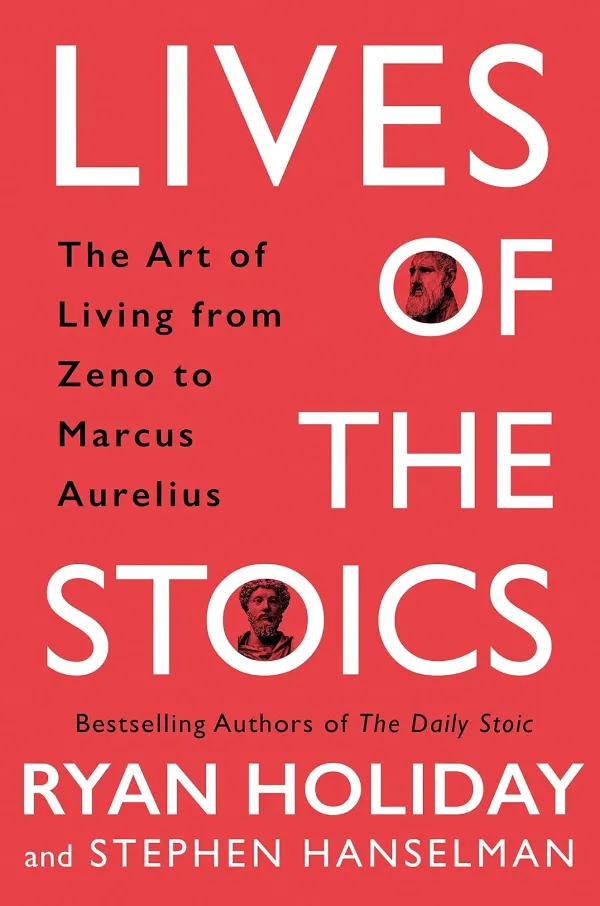
The only reason to study philosophy is to become a better person. Anything else, as Nietzsche said, is merely a “critique of words by means of other words.” No school of thought believed this—in the power of deeds over ideas—more than Stoicism, an ancient philosophy that dates to Greece in the third century BC. It was Seneca, a Stoic philosopher of the Roman era, far removed from the academy, who would say quite bluntly that there was no other purpose to reading and study if not to live a happy life.
This book will be about a different and far more accessible type of wisdom, the kind that comes from people like Seneca, a man who served his country at the highest levels, endured exile and loss, struggled with ambition and personal flaws, and ultimately died tragically and heroically trying to make good on his theories. Unlike the so-called “pen-and-ink philosophers,” as the type was derisively known even two thousand years ago, the Stoics were most concerned with how one lived. The choices you made, the causes you served, the principles you adhered to in the face of adversity. They cared about what you did, not what you said.
Their philosophy, the one that we need today more than ever, was a philosophy not of ephemeral ideas but of action. Its four virtues are simple and straightforward: Courage. Temperance. Justice. Wisdom.
It should not surprise us then that we can learn just as much from the Stoics’ lived experiences (their works) as we can from their philosophical writings (their words). The wisdom offered by Cato the Younger’s published works is scant—as a lifelong public servant, he was too busy in office and in battle to write down more than a few sentences. But the story of how he comported himself—with ironclad integrity and selflessness—amid the decline and fall of the Republic teaches more about philosophy than any essay. Along those lines, little survives to us about the theories of Diotimus, an early-first-century BC Stoic, but the legend of his literary fraud shows us how easily even righteous people can go astray. The same goes for the life of Seneca, whose eloquent letters and books survive to us at length, and yet must be contrasted with the compromises required by his job in Nero’s administration.
And it’s not just the lives of the Stoics that teach volumes but also their deaths—every Stoic was born to die, whether it was by assassination, suicide, or, most uniquely, of laughter, as was the case for Chrysippus. Cicero once said that to philosophize is to learn how to die. So the Stoics instruct us wisely not only in how to live, but in how to face the scariest part of life: the end. They teach us, by example, the art of going out well.
Across the first five hundred years of Stoic history, its members form an astonishing spectrum of stations in life, ranging from Marcus Aurelius, the all-powerful emperor, to Epictetus, a lowly slave who was crippled in captivity but whose writings and life were an example that inspired many, including Marcus. Some of their names you may already be familiar with, and others (Aristo, Diogenes of Babylon, Porcia, Antipater, Panaetius, Posidonius, Arius, and Musonius Rufus) likely not. But each is worth knowing about, whether they were merchants or generals, writers or athletes, parents or professors, daughters or diplomats.
The word “stoic” in English means the unemotional endurance of pain. Yet even a cursory look at the stories of these (mostly) men proves an enormous difference between the expectations of that lowercase stoicism and the realities of the philosophy, uppercase Stoicism. Stoicism is a vibrant, expansive philosophy filled with people who loved, who grieved, who strove, who fought bravely at close range in the great battles of history, who raised children, who wrote important works, who stood tall, who believed, and who lived. In their own time, these philosophers resisted the stereotype of lowercase stoicism, that they were unfeeling beasts of burden who suffered through life and looked only inward.
The Stoics were never simply resigned to the current state of things, accepting without objection the injustices of the world. Rather, they formed the most ardent “Resistance” to the tyranny of Julius Caesar, Nero, and others in the ancient world, even influencing popular democratic reforms. Just as Stoicism was the “stern nurse of heroes during the first century of the Empire,” to borrow historian Richard Gummere’s expression, it would play a similar role for many centuries after, including inspiring the leaders of the American Revolution as well as patriots like Thomas Wentworth Higginson, who led a black regiment for the Union cause in the Civil War (and was a translator of Epictetus). The Stoics have always been people who bled and died for change, whether it was appreciated or successful or not.
What the Stoics were after, what we remain interested in to this day, were lights to illuminate the path in life. They wanted to know, as we want to know, how to find tranquility, purpose, self-control, and happiness. This journey, whether it begins in ancient Greece or modern America, is timeless. It is essential. It is difficult. Which is why we ask, as the Stoics asked: Who can help me? What is right? Where is true north?
On one of his voyages before his shipwreck, perhaps inspired by a similar trek that Socrates had made, Zeno consulted an oracle about what he should do to live the best life. The oracle’s response: “To live the best life you should have conversation with the dead.” It must have struck him there in that bookstore, possibly the same one his father had shopped in years before, as he listened to the words of Socrates read aloud and brought to life, that he was doing precisely what the oracle had advised.
As Zeno left his trading days behind him, he chose a new way of living that balanced study and thought with the needs of a world driven by commerce, conquest, and technology. To Zeno, the purpose of philosophy, of virtue, was to find “a smooth flow of life,” to get to a place where everything we do is in “harmonious accord with each man’s guiding spirit and the will of the one who governs the universe.” To the Greeks, each of us had a daimon, an inner genius or guiding purpose that is connected to the universal nature. Those who live by keeping the individual and universal natures in agreement are happy, Zeno said, and those who don’t are not.
When one young student attracted too many admirers, Zeno ordered him to shave his head to keep them away. When a different rich and handsome student from Rhodes begged Zeno for instruction—no doubt reminding him of himself at that age—he assigned him a seat on a dusty bench, knowing it would dirty the boy’s clothes. Later, he sent him to rub shoulders with the city’s beggars, much the way Crates had sent him through the city carrying soup. But unlike Zeno, who had endured his humiliations and learned from them, this student simply left. Zeno believed that conceitedness was the primary obstacle to learning, and in this instance he was proven correct.
He was also the first to express the four virtues of Stoicism: courage, temperance, justice, and wisdom. He held these traits “to be inseparable but yet distinct and different from one another.” We don’t know where or when Zeno first put this “Big Four” in writing, but we can feel its impact—for they appear in the works and the decisions of nearly every Stoic that came after him.
In the elapsing centuries, this idea has fallen out of favor, but it remains a good one. Anything you do well is noble, no matter how humble. And possibly even more admirable if you deliberately forgo status in the pursuit of what you really love.
Cleanthes loved work and philosophy the same. Indeed, that’s the word the ancients used to describe his industriousness: philoponia—a love of work. Literally, a marrow-deep dedication to honest labor. Not just for money, of course, but also to improve himself.
It is clear that Cleanthes abhorred debt and luxury, preferring the freedom of a humble life to the slavery of extravagance. The saying in Athens was that no one was more temperate than Zeno, but Cleanthes did more to establish the Stoic image of indifference to pain or discomfort as well as distaste for luxury. His cloak was once blown open by the cold wind to reveal not even a shirt underneath, a feat of asceticism that passersby spontaneously applauded. Cleanthes was said to be so frugal that he recorded Zeno’s teachings on oyster shells and the blade bones of oxen to save on the cost of papyrus. The latter claim is doubtless an exaggeration, for Diogenes records that Cleanthes wrote fifty books, many in multiple volumes, and we know of another seven from other authors. Though one could speculate that he saved on buying papyrus until he could put it to the best of all possible uses—recording wisdom for the generations.
Cleanthes dealt with his critics like he dealt with all adversity—as an opportunity to practice what he preached. Once while he sat in a theater, the playwright Sositheus attacked him from the stage by declaiming about those “driven by Cleanthes’ folly like dumb herds.” Cleanthes sat stone-faced, and the audience was so astounded by his calmness that they erupted in applause for his self-discipline and drove the playwright from the stage in response. When Sositheus apologized after the show, Cleanthes readily accepted, saying that greater figures than he had suffered worse abuse by poets and that it would be crazy for him to take offense at such a minor slight.
This kind of self-talk was a core practice for Stoics, and it wasn’t always negative. Once Cleanthes overheard a solitary man talking to himself and kindly told him, “You aren’t talking to a bad man.” That is to say that one’s self-talk must be strict, but never abusive. It appears his frugality and work ethic followed along similar lines. He was tough. He was firm. But he hardly relished self-punishment.
Cleanthes loved the challenge of poetry, believing that the “fettering rules” of the medium allowed him to reach people in a deep and moving way. He offered the analogy of the way that a trumpet focuses our breath into a brilliant sound. This too would be a metaphorical insight that remains central to Stoicism: that obstacles and limitations—if responded to properly—create opportunities for beauty and excellence.
There is sometimes no better way to strengthen your defense than to learn your opponent’s offense, and this is precisely what a good philosopher does. Today we called this “steel-manning”—you don’t need to cheat by assuming the worst about the ideas you’re arguing against. Instead, you can engage with them seriously and earnestly, winning by merit, not by mischaracterization. And as a fighter, Chrysippus enjoyed the challenge.
As mentioned earlier, as a runner, Chrysippus had developed a philosophy of good sportsmanship. He knew that even as athletes are competing with each other, and want desperately to triumph over the rest, there remains an essential brotherhood between everyone participating—from the best to the worst. Tad Brennan, the classics scholar, calls it, appropriately, Chrysippus’s “no-shoving model” of behavior, a model rooted in our relatedness to each other. It was not his only contribution in this regard. Another of Chrysippus’s ethical breakthroughs was to develop the Stoic idea of sympatheia, built on Zeno’s belief that we all belong to one common community, which encourages us to meditate on the interconnectedness of all persons and our shared citizenship in the cosmos.
So it went with the second Zeno. When he quibbled with doctrine, they were minor cavils. In some places he sided with Cleanthes, in others with Chrysippus. But he does not seem to have had an ego. He didn’t thrive on conflict, though we can assume that when trouble knocked on his door it found him home (he published a book titled Against Hieronymus of Rhodes). He did not need the limelight, he did not need to write hundreds of books or hold big lectures. Zeno of Tarsus was a man who was boring enough—and wrote just little enough—to smooth over the ripples and conflicts of his day and pass the philosophy on to the next generation.
What brought Diogenes to Stoic philosophy? Plutarch tells us he was inspired by what he’d read of the founder Zeno’s character. It’s a reminder all these years later for everyone considering their legacy. It’s not what you say that lives on after your time; it’s not what you write or even what you build. It’s the example that you set. It’s the things that you live by.
Not that Antipater was the first Stoic to care about practical ethics. Chrysippus had used his experience in sports to suggest a “no shoving” principle—the idea that we should never cheat or resort to foul play in order to win. Antipater not only took it further, but proposed that ethical behavior—or even sportsmanship—was itself a kind of craft that required real work and effort. For him, the human being in action is better understood as an archer. We train and practice. We draw back the arrow and aim it to the best of our abilities. But we know full well that despite our training and our aim, many factors outside our control will influence where the arrow hits the target—or if it falls short entirely.
the roles and duties common to us all as human beings; the roles and duties unique to our individual daimon, or personal genius/calling; the roles and duties assigned to us by the chance of our social station (family and profession); the roles and duties that arise from decisions and commitments we have made.
Panaetius believed that each person had an inborn desire for leadership, and that we are obligated to fulfill this potential in our own unique way. We may not all be able to be Scipio on the battlefield, or even Panaetius with an elite education and diplomatic connections, but we can serve the public good in many other ways with equal courage. That’s really what the Scipionic Circle was—a diverse collection of men of vastly different talents, stations, and interests all trying to find a way to contribute and thrive in the world.
Panaetius, we can imagine, was the one friends often turned to for advice about how best to do so, and it was aphormai (our inborn resources) that Panaetius pointed them to. It would be a theme, in fact, carried forward by Stoics through to the writings of Marcus Aurelius. Humanity is given these instincts toward virtue by nature, and we can thrive and live nobly if we learn to live consistently with our own nature and our duties, while making the most of the resources we have been given. Panaetius, while born to privilege, chose not to settle into that comfortable life of ease. Instead, he openly embraced duty and the responsibility of a much broader stage. He took the resources he was given and leveraged them, becoming the best version of himself and contributing as much as he could to the big projects of his time.
But for a time, Rutilius Rufus had let his light shine. He had been a force for good in the world and had suffered for it. But never, it seems, did he question whether it was worth it. Nor did he harbor any bitterness about his fate. He had looked at himself and the corruption around him and decided that no matter what other people said or did, his job was to be good. He knew, as Marcus Aurelius would remind himself over and over, that all he controlled was his character and his ability to let his true colors shine undiminished. You can lay violent hands on me, Zeno had said, but my mind will remain committed to philosophy.
But this inner battle—as Martin Luther King Jr. would later call the Civil War between the “North” and “South” of our souls—rings true to any person with a shred of self-awareness. We have competing parts within us, and what matters in life is which side we choose to turn ourselves over to. One must design one’s life, Posidonius said, “to live contemplating the truth and order of the universe and promoting it as much as possible, being led in no respect by the irrational part of the soul.” This was a feat that Marius and Sulla, Athenion and, sadly, even Pompey could not seem to achieve, despite all their cunning or military might.
For a school that prized logic and truth as much as virtuous behavior, Diotimus’s actions would have been inexcusable. Even if Epicureanism was now posing some kind of existential threat to Stoicism, it hardly justifies the commission of literary fraud. “If it is not right, do not do it,” Marcus Aurelius would write in his encapsulation of Stoic doctrine, “if it is not true, do not say it.” The Stoic is supposed to be beyond grudges, beyond revenge, beyond petty competition or the need to win arguments. Certainly, they’re not supposed to do anything—let alone lie and mislead—out of spite. Somewhere, somehow, Diotimus went astray.
The Senate, trusting in Cicero, bestowed on him nearly dictatorial powers to put down the threat. The Republic and Cicero himself, like many empires believing they faced an existential threat to their institutions, warped under the pressure. Cato, the Stoic, urged Cicero to exact the full measure of the law from these criminals. It was only just, he said.
But before he made his name as a politician, Cato was a soldier. In 72 BC, he volunteered for service in the Third Servile War, against Spartacus. It would have been unconscionable to let someone else serve in his place. To Cato, it was the actions one took, the sacrifices one was willing to make—especially at arms defending one’s country—that made you a philosopher. And so in that war, as in the battles he fought in, he was fearless and committed, as he believed every citizen was obligated to be.
We naturally care what people think of us; we don’t want to seem too different, so we acquire the same tastes as everyone else. We accept what the crowd does so the crowd will accept us. But in doing this, we weaken ourselves. We compromise, often without knowing it; we allow ourselves to be bought—without even the benefit of getting paid for it.
Of all the Stoics, it was Cato who most actively practiced Aristo’s ideas about being indifferent to everything but virtue. Public opinion? Keeping up with appearances? His “brand”? Cato could have lived in great luxury, but he chose the Spartan life. And while there might have been a sliver of haughtiness to his demeanor, we are also told that his walks through the streets of Rome were filled with polite salutes to everyone he met and many unsolicited offers to help those in need. Reputation didn’t matter. Doing right did.
You will not find many statues of Cato in Rome or many books about him. For some reason, the honors go to the conquering generals and the tyrants instead. His great-grandfather had once said that it was better to have people ask why there wasn’t a statue in your honor than why there was. In the case of Cato the Younger, it’s even simpler: His character was the monument; his commitments to justice and liberty and courage and virtue are the pillars of the temple that stands to this day.
Whether one believed in ghosts or the supernatural, as Octavian likely did, was beside the point. Stoics must always keep their head. Even the scariest situations can be resolved with reason and courage. And even if you believe in silly things like ghosts or superstitions, you can’t let your life be ruled by them. You must be in charge—no excuses.
Seneca, who would advise emperors himself, studied Athenodorus’s example and is the source for much of our knowledge of him. From him, we learn that Athenodorus balanced out his teachings on sobriety and hard work with a focus on the importance of tranquility, particularly for leaders. Yes, we must carefully follow public affairs, but it was also necessary to leave behind the grind of work and the stress of politics with retreats into the private sphere of friends. Athenodorus would note that Socrates would stop and play games with children in order to rest and have fun. The mind must be replenished with leisure, Athenodorus believed, or it was likely to break under pressure, or be susceptible to vices.
Although we have just an example or two of Arius’s realpolitik, we have much more evidence of his Stoic teachings. Several manuscripts of his writings survive—manuscripts that express not just his beliefs but summaries of centuries of Stoic doctrine. At the core of these writings are discussions of the four cardinal virtues: wisdom (phronesis), self-control (sophrosune), justice (dikaiosune), and bravery (andreia). Marcus Aurelius, very familiar with Arius’s legacy—both politically and philosophically—would put those four virtues on the ultimate pedestal. If we ever find something better than “justice, honesty, self-control, courage . . . if you find anything better than that, embrace it without reservations,” he wrote—they must be very special indeed.
Wisdom is the knowledge of what things must be done and what must not be done and what is neither, or appropriate acts (kathekonta). Within wisdom, we’ll find virtuous qualities like soundness of judgment, circumspection, shrewdness, sensibleness, soundness of aim, and ingenuity. Self-control is the knowledge of what things are worth choosing and what are worth avoiding and what is neither. Contained within this virtue are things like orderliness, propriety, modesty, and self-mastery.
Could he have done this without the lessons of his teachers and their philosophy? Can anyone? No. We need guidance and we need to love the process of getting better, the Stoics believed, or we will regress to the level of everyone else. Close to Arius’s heart, Octavian was the epitome of philoponia—and seemed to genuinely love to toil on behalf of the good of everyone.
In the end, Seneca made little progress with Nero, a man whom time would shortly reveal to be deranged and flawed. Was it always a hopeless mission? Was Seneca’s steady hand a positive influence—one that Rome would have been worse off without? We cannot know. What we know is that Seneca tried. It’s the old lesson: You can lead a horse to water, but you can’t make it drink. You control what you do and say, not whether people listen.
One explanation is fear. His whole life he had watched emperors murder and banish with impunity. He had felt the hard hand of their injustice himself more than once. Imperial vindictiveness loomed over him. As Dio Cassius relates, “After the death of Britannicus, Seneca and Burrus no longer gave any careful attention to the public business, but were satisfied if they might manage it with moderation and still preserve their lives.” Perhaps he thought, as people think today with flawed leaders, that he could do good through Nero. Seneca had always looked for the good in people, even someone as obviously bad as Nero. “Let’s be kind to one another,” he once wrote. “We’re just wicked people living among wicked people. Only one thing can give us peace, and that’s a pact of mutual leniency.” Maybe he saw something in Nero up close, a goodness despite the flaws, that has been lost to the historical record.
Not long before, he had written to Lucilius that while it was true that a tyrant or a conqueror could suddenly send us off to our death, this was actually no great power. “Take my word for it,” he had said, “since the day you were born you are being led thither.” Seneca believed that if we wanted “to be calm as we await that last hour,” we must never let the fact of our mortality slip from consciousness. We were sentenced to death at birth. For Seneca, all Nero was doing was moving up the timeline. Knowing this, he could now hug his wife, Paulina, and urge her calmly not to grieve for him too much and to live on without him.
Nero’s depravity had reached sadistic levels. Holding Plautus’s head before an audience, he referred to himself in the third person. “Nero, why did you fear a man with such a nose?” Not finished with his humiliation, he wrote to the Senate to inform them that Plautus had been an unstable figure who had threatened Rome (remember the tactic from Rutilius Rufus’s time: Accuse the good man of exactly what you, the evil man, are yourself guilty of). Nero lacked the courage to own his dirty work, but he demanded credit for protecting the peace.
To Musonius, the sign of a successful philosopher was not the loud cheering of supporters. It was silence. Because it meant the audience was actually thinking—it meant they were wrestling with the difficult ideas that the speaker was getting across.
Even his view of marriage was modern, calling for the “perfect companionship and mutual love of husband and wife, both in health and in sickness and under all conditions.” A good marriage, he believed, was one where a couple strove to outdo each other in devotion. He spoke of the kind of “beautiful union” that Brutus and Porcia had, where two souls stick with each other through the adversity of life and inspire each other to greater virtue. What was Musonius’s marriage like? We don’t know—but it would be incredible to think that a man who wrote so movingly about the benefits of this kind of marriage would not be speaking from experience, and more impossible still that Musonius could have endured the adversity he was soon to face without a life partner of courage and virtue.
” Although Musonius Rufus was not a slave, he and Epictetus had long conversations about the human condition. Both, clearly, had experienced the worst of what men could do to each other—Musonius with his repeated exiles, and Epictetus living through bondage. Yet instead of taking bitterness from this, instead of losing their sense of agency over their lives, they were both pushed by these painful events toward realizing that the only power they actually had was over their mind and their character. “If a person gave away your body to some passerby, you’d be furious,” Epictetus said, yet we so easily hand our mind over to other people, letting them inside our heads or making us feel a certain way.
You can only lose what you have. You don’t control your possessions, so don’t ascribe more value to them than they deserve. And whenever we forget this, life finds a way to painfully call it back to our attention.
It cannot have been easy for Epictetus to think these thoughts about a boy he loved, but he knew from experience that life was cruel. He wished to remind himself that his precious son was not his possession, nor were his friends or his students or his health. The fate of these things remained, for the most part, outside his control. Which for a Stoic means only one thing: Cherish them while we have them, but accept that they belong to us only in trust, that they can depart at any moment. Because they can. And so can we.
It’s an example that should challenge every talented and brilliant person: You owe it to yourself and to the world to actively engage with the brief moment you have on this planet. You cannot retreat exclusively into ideas. You must contribute.
By the time Marcus was ten or eleven, he had already taken to philosophy, dressing the part in humble, rough clothing and living with sober and restrained habits, even sleeping on the ground to toughen himself up. Marcus would write later about the character traits he tried to define himself by, which he called “epithets for yourself.” They were “Upright. Modest. Straightforward. Sane. Cooperative. Disinterested.” Hadrian, who never had a son and had begun to think about choosing a successor (just as he had been selected himself by the heirless emperor Trajan), must have sensed the commitment to those ideas in Marcus from boyhood on. He must have seen, as they hunted wild boar together, some combination of courage and calmness, compassion and firmness. He must have seen something in his soul that Marcus likely could not even see himself, because by Marcus’s seventeenth birthday, Hadrian had begun planning something extraordinary.
When you need encouragement, think of the qualities the people around you have: this one’s energy, that one’s modesty, another’s generosity, and so on. Nothing is as encouraging as when virtues are visibly embodied in the people around us, when we’re practically showered with them. It’s good to keep this in mind.
You must build up your life action by action, and be content if each one achieves its goal as far as possible—and no one can keep you from this. But there will be some external obstacle! Perhaps, but no obstacle to acting with justice, self-control, and wisdom.
“There is no role so well suited to philosophy as the one you happen to be in right now,” Marcus Aurelius would write. He probably meant the role of emperor, but the meaning can easily be extended: The role of parent. The role of spouse. The role of a person waiting in line. The role of a person who has just been given bad news. The role of a person who is rich. The role of a person sent into exile or delivered into bankruptcy. The role of a person who finds themselves enslaved, literally or otherwise.
That’s what Stoicism is. It’s stretching. Training. To be better. To get better. To avoid one more mistake, to take one step closer toward that ideal. Not perfection, but progress—that’s what each of these lives was about.
55 highlights, exported from my Kindle via Readwise.