About the book
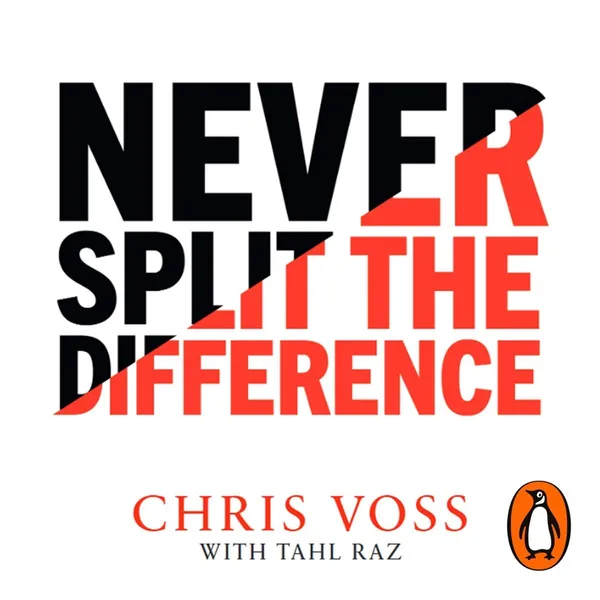
Brought to you by Penguin. THE HUGE INTERNATIONAL BESTSELLER A former FBI hostage negotiator offers a new, field-tested approach to negotiating - effective in any situation. After a stint policing the rough streets of Kansas City, Missouri, Chris Voss joined the FBI, where his career as a kidnapping negotiator brought him face-to-face with bank robbers, gang leaders and terrorists. Never Split the Difference takes you inside his world of high-stakes negotiations, revealing the nine key principles that helped Voss and his colleagues succeed when it mattered the most - when people's lives were at stake. Rooted in the real-life experiences of an intelligence professional at the top of his game, Never Split the Difference will give you the competitive edge in any discussion. 'My pick for book of the year.' Forbes 'Who better to learn [negotiation] from than Chris Voss, whose skills have saved lives and averted disaster?' Daily Mail 'A business book you won't be able to put down.' Fortune © Chris Voss 2016 (P) Penguin Audio 2019
Highlights that stuck
Now think about that: under this model, if you know how to affect your counterpart’s System 1 thinking, his inarticulate feelings, by how you frame and deliver your questions and statements, then you can guide his System 2 rationality and therefore modify his responses. That’s what happened to Andy at Harvard: by asking, “How am I supposed to do that?” I influenced his System 1 emotional mind into accepting that his offer wasn’t good enough; his System 2 then rationalized the situation so that it made sense to give me a better offer.
What were needed were simple psychological tactics and strategies that worked in the field to calm people down, establish rapport, gain trust, elicit the verbalization of needs, and persuade the other guy of our empathy. We needed something easy to teach, easy to learn, and easy to execute.
It all starts with the universally applicable premise that people want to be understood and accepted. Listening is the cheapest, yet most effective concession we can make to get there. By listening intensely, a negotiator demonstrates empathy and shows a sincere desire to better understand what the other side is experiencing.
The first step to achieving a mastery of daily negotiation is to get over your aversion to negotiating. You don’t need to like it; you just need to understand that’s how the world works. Negotiating does not mean browbeating or grinding someone down. It simply means playing the emotional game that human society is set up for. In this world, you get what you ask for; you just have to ask correctly. So claim your prerogative to ask for what you think is right.
Effective negotiation is applied people smarts, a psychological edge in every domain of life: how to size someone up, how to influence their sizing up of you, and how to use that knowledge to get what you want.
Great negotiators are able to question the assumptions that the rest of the involved players accept on faith or in arrogance, and thus remain more emotionally open to all possibilities, and more intellectually agile to a fluid situation.
There’s one powerful way to quiet the voice in your head and the voice in their head at the same time: treat two schizophrenics with just one pill. Instead of prioritizing your argument—in fact, instead of doing any thinking at all in the early goings about what you’re going to say—make your sole and all-encompassing focus the other person and what they have to say. In that mode of true active listening—aided by the tactics you’ll learn in the following chapters—you’ll disarm your counterpart. You’ll make them feel safe. The voice in their head will begin to quiet down.
The goal is to identify what your counterparts actually need (monetarily, emotionally, or otherwise) and get them feeling safe enough to talk and talk and talk some more about what they want. The latter will help you discover the former. Wants are easy to talk about, representing the aspiration of getting our way, and sustaining any illusion of control we have as we begin to negotiate; needs imply survival, the very minimum required to make us act, and so make us vulnerable. But neither wants nor needs are where we start; it begins with listening, making it about the other people, validating their emotions, and creating enough trust and safety for a real conversation to begin.
But neither wants nor needs are where we start; it begins with listening, making it about the other people, validating their emotions, and creating enough trust and safety for a real conversation to begin.
Going too fast is one of the mistakes all negotiators are prone to making. If we’re too much in a hurry, people can feel as if they’re not being heard and we risk undermining the rapport and trust we’ve built. There’s plenty of research that now validates the passage of time as one of the most important tools for a negotiator. When you slow the process down, you also calm it down. After all, if someone is talking, they’re not shooting.
63 highlights in my Readwise library; these are the ones I keep coming back to.